

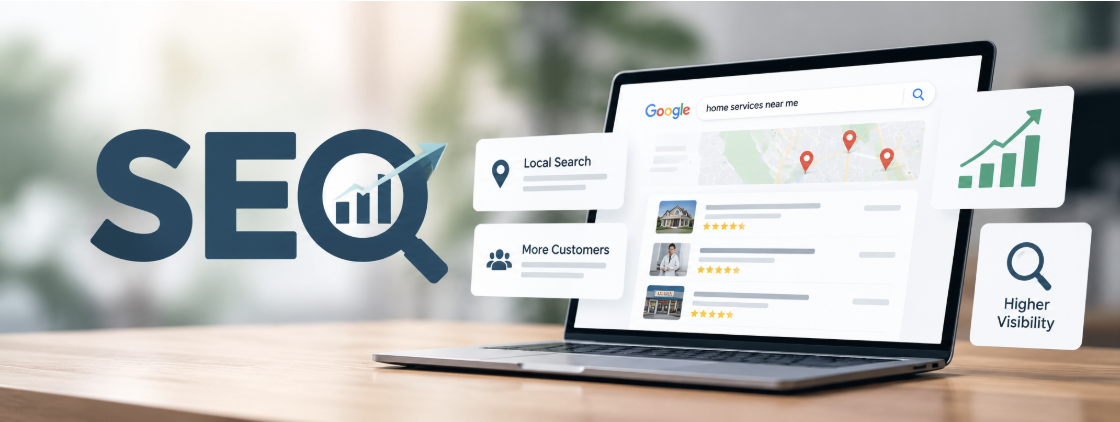
How Local SEO Helps Businesses Capture High-Intent Customers
The way consumers discover and connect with businesses has evolved significantly as digital technology continues to influence purchasing behavior. Search engines have become another valuable part of the consumer journey. Today, consumers rely on search engines to explore businesses and make informed purchasing decisions.
For businesses, this creates an opportunity to reach consumers who are already interested in what they offer. In today’s world, having a website is not enough. Businesses need to make sure their information appears when customers are actively searching for relevant products or services. This is where local search engine optimization becomes valuable.
Local SEO helps businesses improve their visibility in location based search results, allowing them to connect with potential customers in their surrounding communities. More importantly, it helps businesses reach high-intent customers who may already be prepared to make a purchase, schedule an appointment, or request a service.
Rather than focusing only on reaching a larger audience, local SEO allows businesses to focus on reaching the right audience at the right time.
What Is Local SEO?
Local SEO is a digital marketing strategy that helps businesses improve their visibility in search results associated with specific geographic locations. It focuses on making a business easier to discover when consumers search for nearby products or services.
When someone performs a local search, Google evaluates several factors to determine which businesses are most relevant. These factors include relevance, distance, and prominence. Together, they help Google identify businesses that may best match the consumer’s search.
Someone searching for “plumbers in San Diego” is likely looking for a company that serves that area. Similarly, a consumer searching for “family dentist near me” may be interested in finding a convenient healthcare provider.
Local SEO helps businesses become more visible during these searches through accurate business listings, relevant website content, and location-specific keywords. It also supports traditional advertising by making it easier for consumers to find a company after becoming familiar with its brand.
For small and medium-sized businesses that depend on local customers, this visibility can create valuable opportunities for growth.
Why High-Intent Customers Matter
Not every consumer who discovers a business is ready to make a purchase. Some people are researching information or exploring available options. Others have already identified a need and are actively searching for a business that can provide a solution.
High-intent customers are consumers whose search behavior suggests they may be closer to making a purchasing decision. These individuals may be preparing to schedule an appointment, request an estimate, or purchase a product.
Someone searching for “what causes a roof to leak” may be gathering general information. However, someone searching for “emergency roof repair near me” may need immediate professional assistance. Although both searches create opportunities for businesses, the second suggests a greater likelihood of near-term customer action.
Local SEO helps businesses reach these consumers by improving their visibility when relevant searches occur. This allows companies to connect with people who have already demonstrated interest in their products or services.
Attracting high-intent customers should not replace broader brand awareness efforts. Traditional advertising helps introduce businesses to potential customers before they identify a specific need. Local SEO strengthens these efforts by helping consumers find those businesses when they are ready to learn more.
How Local SEO Supports the Customer Journey
Consumers often go through several stages before choosing a business. They may begin by identifying a problem, researching possible solutions, and comparing available providers. This process is commonly known as the customer journey.
Local SEO can help businesses connect with consumers throughout these stages. By providing relevant information at different points in the purchasing process, companies can build familiarity and help potential customers make informed decisions.
Building Awareness Through Search
The customer journey often begins when someone recognizes a problem or identifies a need. For example, a homeowner may notice that the exterior paint on their house is beginning to peel. Before contacting a painting contractor, they might search for information about what causes peeling paint or how often a house should be repainted.
A painting company that publishes educational content addressing these questions has an opportunity to introduce its services to potential customers. Helpful articles can explain common problems and provide useful information about possible solutions.
Although these consumers may not be ready to make a purchase, educational content can help establish credibility. This initial interaction may encourage them to remember the company when they eventually need professional assistance.
Helping Customers Compare Their Options
As consumers move further through the purchasing process, their searches often become more specific. Instead of researching general information, they may begin comparing local businesses and evaluating their services.
For example, someone searching for “exterior painting companies in San Diego” may be comparing contractors before requesting an estimate. At this stage, customers want information that helps them understand which business best meets their needs.
Businesses can support this process by providing detailed service descriptions, project examples, and answers to frequently asked questions. Customer testimonials and clear explanations of the company’s experience can also help consumers evaluate their options.
Providing useful information makes the decision-making process easier and gives potential customers a better understanding of what a business offers.
Encouraging Customers to Take Action
The final stage occurs when consumers are ready to contact a business or make a purchase. Their searches may include phrases such as “request an estimate,” “schedule an appointment,” or “open now”.
At this point, businesses should make the next step as convenient as possible. Accessible contact information, clear calls to action, and simple appointment scheduling can help consumers complete their intended actions.
For example, someone searching for an emergency plumbing service may want immediate access to a phone number. A website that clearly displays this information can make it easier for that person to contact the company.
Local SEO helps customers discover relevant businesses, while an effective website experience can turn that interest into customer inquiries.
Google Business Profile: Helping Customers Find Your Business
One of the most important components of local SEO is maintaining an accurate Google Business Profile. This free tool allows eligible businesses to manage how their information appears in Google Search and Google Maps.
When consumers search for nearby businesses, they may see listings containing operating hours, phone numbers, addresses, photographs, and customer reviews. This information helps consumers evaluate businesses before visiting their websites.
If someone searching for an auto repair shop may compare several local options based on operating hours and customer feedback. A complete business profile makes it easier for consumers to find the information they need.
Businesses should regularly review their profiles to ensure that contact information and service details remain accurate. Updating photos and selecting appropriate business categories can also help customers better understand what a company offers.
Although a complete profile does not guarantee higher search rankings, it supports a more convenient customer experience. Accurateop information can also reduce missed opportunities caused by outdated phone numbers or incorrect operating hours.
How Customer Reviews Build Trust and Credibility
Customer reviews can influence how consumers evaluate a business before making contact. Many people read reviews to learn about previous customers’ experiences and determine whether a company appears trustworthy.
A homeowner searching for a landscaping company may compare reviews from several local providers. Positive feedback describing professional service and successful projects can help the homeowner feel more confident about contacting a business.
Reviews also provide businesses with an opportunity to demonstrate their commitment to customer service. Responding to positive feedback shows appreciation, while addressing negative reviews professionally can demonstrate accountability.
Businesses should encourage customers to share honest feedback through Google and other relevant review platforms. Authentic reviews can strengthen a company’s online reputation and provide valuable insight into the customer experience.
Google also considers review-related signals when evaluating local search prominence. This means customer feedback can support both online visibility and consumer confidence.
Using Local Keywords to Attract Relevant Customers
Keywords help search engines understand the information and services available on a website. In local SEO, these keywords often combine a specific product or service with a geographic location.
Businesses can naturally include relevant keywords in website headings, page titles, service descriptions, and educational articles. An effective keyword strategy should focus on providing useful information rather than repeatedly inserting search terms.
A home remodeling company could publish an article explaining the costs and timelines involved in a kitchen renovation. This content could answer common customer questions while creating opportunities to appear in relevant search results.
By understanding what consumers are searching for, businesses can develop content that addresses their needs. This approach helps improve the usefulness of a website while supporting local search visibility.
Turning Website Visitors Into Customers
Attracting visitors through local search is only one part of an effective marketing strategy. Once consumers reach a website, they should be able to find relevant information and take action without unnecessary difficulty.
A confusing website or outdated information can discourage potential customers from contacting a business. This is especially important for consumers searching for services that require immediate attention.
If someone searching for emergency plumbing assistance may not want to navigate several pages to find a phone number. A clear website layout and accessible contact information can make the process more convenient.
Businesses can improve the customer experience by maintaining mobile-friendly websites and providing detailed service information. Fast loading speeds and straightforward calls to action can also help visitors complete their next steps.
A button labeled “Schedule an Appointment” or “Request an Estimate” provides clear direction for interested consumers. These improvements support conversion rate optimization, which focuses on increasing the percentage of website visitors who complete a desired action.
The objective is not simply to attract more website visitors. Businesses should focus on creating an experience that encourages relevant visitors to become potential customers.
How Local SEO and Traditional Advertising Work Together
Local SEO is most effective when it supports a broader marketing strategy. Traditional advertising and digital marketing provide different opportunities to reach consumers throughout the purchasing process.
Traditional advertising channels such as billboards, radio, television, and direct mail help businesses introduce their brands to larger audiences. These channels can strengthen brand recognition and keep companies top of mind.
Local SEO complements these efforts by helping consumers find a business when they begin searching online. This creates a connection between the awareness generated through advertising and the information consumers need before making a decision.
Someone may regularly pass a billboard advertising a local home improvement company. The advertisement introduces the brand and helps the consumer become familiar with its name.
Several weeks later, that person may decide to begin a home renovation project. They remember the company from the billboard and search for it online. A well-maintained Google Business Profile and informative website can help them find the company and explore its services.
This example demonstrates how traditional advertising and local SEO can support one another. Advertising helps establish brand familiarity, while local SEO makes it easier for consumers to reconnect with a business during their research.
By integrating both approaches, businesses can maintain a more consistent presence throughout the customer journey. This allows companies to reach potential customers before they identify a need and remain accessible when they are ready to take action.
How Businesses Can Measure Local SEO Success
Measuring local SEO performance helps businesses understand whether their marketing efforts are producing meaningful results. Although search rankings and website traffic provide useful information, they do not always show whether online visibility is generating customer inquiries.
Businesses should evaluate how consumers discover their websites and what actions they take afterward. Important measurements include organic search traffic, phone calls, appointment requests, and contact form submissions.
A home service company may notice an increase in website visitors after improving its local search visibility. The company should also examine whether those visitors are requesting estimates or scheduling services.
Tools such as Google Analytics and Google Search Console can help businesses monitor website performance. Google Business Profile performance reporting can provide additional information about certain interactions with local listings.
By reviewing these measurements, businesses can identify which pages attract relevant visitors and where improvements may be needed. This information helps companies make informed decisions about their ongoing marketing strategies.
Ultimately, successful local SEO should support meaningful business goals rather than focusing exclusively on website traffic.
Local SEO and Long-Term Business Growth
Local SEO can contribute to long-term business growth by helping companies maintain visibility in relevant search results. As businesses improve their websites and online information, they create additional opportunities for consumers to discover their services.
Unlike paid advertising placements that require continued spending to remain active, organic search results do not charge businesses for individual clicks. Nevertheless, maintaining strong local search visibility still requires ongoing effort and investment.
Businesses should regularly update their website content and review their online listings. Monitoring customer feedback and search performance can also help identify opportunities for improvement.
Local SEO becomes especially valuable when combined with other marketing channels. Traditional advertising can continue building brand recognition, while social media and paid digital campaigns help businesses engage with targeted audiences.
Together, these strategies create multiple opportunities for consumers to discover and connect with a company. A consistent marketing presence can also help strengthen customer relationships over time.
Conclusion: Connect With Customers When They Are Ready to Buy
Local SEO provides businesses with an opportunity to reach consumers who are actively searching for relevant products and services. By improving local search visibility and maintaining accurate business information, companies can make it easier for potential customers to discover their services.
Educational website content and authentic customer reviews can help consumers evaluate their options. A user-friendly website can then encourage interested visitors to contact the business or request additional information.
Local SEO should not operate independently from other marketing efforts. Traditional advertising remains an important strategy for building brand awareness and introducing companies to new audiences.
When traditional advertising and local SEO work together, businesses can strengthen their visibility throughout the customer journey. This integrated approach helps companies build recognition, support purchasing decisions, and create opportunities for long-term growth.
At LMA Marketing & Advertising, we help businesses develop integrated marketing strategies that build brand awareness and connect with customers across multiple channels.
Frequently Asked Questions About Local SEO
What is the difference between SEO and local SEO?
SEO focuses on improving a website’s visibility in organic search results. Local SEO specifically helps businesses become more visible in searches associated with geographic locations. It is especially useful for companies serving customers in particular cities or communities.
Why is local SEO important for small businesses?
Local SEO helps small businesses reach nearby consumers searching for relevant products or services. Improving local search visibility can create more opportunities for website visits, customer inquiries, and appointments. It can also help smaller companies compete for attention within their communities.
How does local SEO attract high-intent customers?
Local SEO helps businesses appear in searches related to specific products or services within a geographic area. These searches may indicate that consumers are comparing options or preparing to make a purchase. This creates opportunities to connect with customers who have already identified a need.
How long does local SEO take to show results?
The timeline depends on local competition, website quality, and existing search visibility. Some improvements may become noticeable within weeks, while more competitive markets may require several months of consistent optimization. Results vary and are not guaranteed.
Do customer reviews affect local SEO?
Yes. Google considers review-related signals when evaluating local search prominence. Reviews also help potential customers assess a company’s credibility and service quality. Businesses should encourage authentic feedback and respond professionally to customer experiences.
Can local SEO help businesses without a physical storefront?
Yes. Eligible service-area businesses can benefit from local SEO even without a customer-facing storefront. Examples include plumbing companies, landscaping services, and physical therapy providers. Their strategies can focus on the geographic areas where they provide services.
How can businesses measure local SEO performance?
Businesses can monitor organic search traffic, search visibility, phone calls, appointment requests, and qualified leads. Google Analytics and Google Search Console can help track website performance. These measurements provide insight into whether local SEO is supporting business goals.
Does local SEO replace traditional advertising?
No. Local SEO and traditional advertising serve complementary purposes. Traditional advertising helps businesses build brand recognition and reach potential customers. Local SEO supports these efforts by making companies easier to discover when consumers actively search for their products or services.